Image source: https://i.ytimg.com/vi/QG_Pi051qao/maxresdefault.jpg
PURPOSE OF STUDY My purpose of studying his wide and rich literature is to get an insight into major social events and political upheavals during his adult life, the way he courageously exposed the hypocrisies in the Indian social mindset is the actual point to be noted. He used powerful expression to reveal the orthodox society. Although highly criticized, he was far ahead of his times to give wings to his flights of imagination with its solid heels on earth. The best thing about his plays was that they could be related to the real life of a middle class man. Many of Tendulkar's plays derived inspiration from real-life incidents or social upheavals. The way he galvanized theatre through his provocative explorations of morality, power and violence, deserves a standing ovation! The reason behind his huge success was the accurate and sensitive portrayal of the social issues of the time. The "middle class", an emotion-ridden if ultimately elusive concept, has been redefined by Tendulkar as those fighting privilege to escape the economic insecurity (not to mention the indignity). In a country characterized by poverty and inequality, the complex interplay of these factors can have favorable or adverse effects on different regions and on different classes of society. Tendulkar has untapped the this group's position in the class hierarchy and in the overall power strucutre, as well as its environmental vulnerability. Generally, people from the middle strata are likely to be the greatest sufferers in this process. Is what he has portrayed this gives a great matter for Tendulkar's ideas to flourish and ripen? Not only class but gender is an important dimension of patterns of the class division which drew the attention of Tendulkar. In his feminist research on the effects of development on women has clearly revealed that in many areas of the country the rights of women are infringed and women are exploited emotionally, socially, and physically. Tendulkar successfully gives the readers a clear insight into the lives of his individual characters and evokes empathy for them all, as they seem to be victims of their own trappings. Her portrayal of women characters range from the socially depraved characters who are so close to the real life. Tendulkar's strengths are evident and there is tenderness and realism in his depiction of the central character he focused upon. JUSTIFICATION Vijay Tendulkar happens to be one of the most probific Indian play wrights who has enriched the Indian drama and theatre by picturizing the varied problems of native life in Maharastra. The main reason for our attraction for him is that he does not copy from or imitate the Western dramatists and thrust it on the native audience. Vajay Tendulkar successfully ventures in unveiling the social turpitude and the holocaust in which the fain interests of the fairer sex are almost strangled. His econoclastic endeawours arinililate the very ground of the established values of a fundamentally orthodox Indian society. INTRODUCTION OF THE PLAYWRIGHT Vijay Dhondopant Tendulkar (born January 28, 1928) in Kolhapur, India is a leading contemporary Indian playwright, screen and television writer literacy essayist, political journalist and social commentator for the past five decades. He has been the most influential dramatist and theater personality in Marathi. Vijay Dhondopant Tendulkar was born in a Bhalavalikar Saraswat Brahmin family in Kolhapur, Maharashtra, where his father held a clerical job and ran a small publication business. The literacy environment at home prompted young Vijay to take up writing. He wrote his Ist story at age six. He grew up watching western plays and felt inspired to write plays himself. At age eleven he wrote, directed and acted in his Ist play. At age 14 he participated in the 1942, Indian freedom movement leaving his studies. The later alienated him from his family and friends writing then became his outlet though most of his early writings were of a personal nature, and intended for publication. Tendulkar began his career writings for newspapers. He had already written a play "Amchyavar Kon Prem Kamar" (Who will love us) and he also wrote a play "Gruhastha" (The house holder) in the early 20's the later did not receive much recognition from the audience. In 1956, he wrote "Shrimant" which established him a good writer. In 1961, Tendulkar wrote the play, "Gidhade" (The Vultures) but it was not produced until 1970 "Gidhade" proved to be a turning point in Tendulkar's writing with regard to establishment of his own unique writing style. In 1967 his silence "The Court is in Session" a mile-stone not only in his career but in the history of whole Marathi drama. He was now marked out as a rebel against the establishment values of a fundamentally orthodox society. In his 1972 play "Sakharam Binder" (Sakharam the Binder) Tendulkar dealt with topic domination of the male gender over the female for the many decades no play created such a sensation in a theatre world of Maharashtra as his play Sakharam Binder. Sakharam Binder is probably the most intensity naturalistic play 1972, Tendulkar wrote a musical play, "Ghashiram Kotwal" (Ghashiram the Constable), which dealt with political violence. The play is a political satire created as a music drama set in 18th century Pune. It combined traditional Marathi folk music and drama with contemporary theater technique, creating a new Paradigm for Marathi theater. It brought him a "Jawaharlal Nehru fellowship", (1974-75) for a project titled, "An Enquiry into the pattern of growing violence in society and its relevance to contemporize theatre". "Ghashiram Kotwal" remains one of the longest running plays in the history of Indian Treater. Ghashiram rose to such forors, that there came international recognition, although the play received fierce opposition from the local Marathi audience. By its admixture of melody in the Aristotelian sense with prose dialogues Ghashiram, created a new form of drama on the Marathi stage. Such a mode of drama received not only national but global acceptance. Tendulkar wrote screen-plays for the movices Nishant (1974), Akrosh (the cry) (1980), and Ardhsatya (the half truth) (1984), established his as an important "chronicler of violence of the present time he has written eleven movies in Hindi and eight movies in Marathi. In 1990's Tendulkar wrote an acclaimed TV-series "Swayamsiddha" in which his daughter, Priya Tendulkar performed in the lead role. His son Raja and wife Nirmala both died in 2001, and were shortly followed by his daughter, actress Priya Tendulkar in 2002. In his writing career spanning more than five decades Tendulkar has written 27 full length plays and 25 one act plays. Tendulkar, by providing insight into major social events and political uphearoals his adult life. Tendulkar became one of the strongest redical political voices in Maharashtra in recent times. Tendulkar won Maharastra state government awards in 1956, 1969 and Maharashtra "Gauruw Puraskar" in 1999. He was honoured with the Sangeet Natak Academy Award in 1970, and again in 1998 with the Academy's highest award for "Life time Contribution". In 1998 he won the Sangeet Natak Academy fellowship. In 1984 he received the Padam Bhushan award from the government of India for his liteary accomplishments. In 1977, Tendulkar won the National Film award for his best screen-play of Shyam Bennegal's movies Manthan. He has written screen plays for many significant art movies, such as Nishant, Akrosh and Ardhsatya. Vijay Tendulkar festivals, was celebrated in New York (U.S.A.) in Octobar 2004. Actor Amol Palekar organized a festival of Tendulkar plays in Pune and triggered a welcome once. Thus Tendulkar is a creative writer with a fine sensibility and at the same time a contemplative and controversial dramatist. He has a made a mark in the field of journalism also. Because of his highly individual outlook on and vision of life and because of his personal style of writing he has made a mark in the field of journalism also. Because of his highly individual outlook on and vision of life and because of his personal style of writing he has made a powerful impression in the field of literature and drama. By doing so he has put Marathi drama on the national and international map. This prolific writer left us on May 9, 2008, after five week at Prayag Hospital battled the effect of myasthenia gravis. Tendulkar's multi faceted creative genius, who experimented and explored the potentials of the dramatic genre. Tendulkar's plays have a massive impact on the tender and fresh minds of the worldwide avid readers. THEMES Tendulkar is a towering and Gullivering Indian dramatist and all his play are sharply focused and illuminating. Through is writings he attacks the society hypocrisies. Thematically, his plays have ranged from the alienation of the modern individual to contemporary politics from social-individual tensions to the complexities of human character, from the exploration of man woman relationship to reinterpretations of historical episodes. The themes of gender relation, sexual norms, institution of marriage and issues of conventional morality have been featured prominently in his plays. In silence the court is in session. Tendulkar has combined social criticism with the tragedy of an individual victimized by society. Sakharam explores with great objectivity the complication in human nature two necessary component of which are sex and violence. His Ghashiram Kotwal dealt with political violence. Tendulkar through his writings has exposed the theme of man's existential Loneliness. There is a streak of naturalism and humanism in all his plays. All his convey a social message through his writings he wanted to make society a better place to live in. Tendulkar exposed alienation of modern individual to contemporary polities. He also exposed men's dominance over women, his portraiture of overt and covert violence in human-beings and above all his deep and abiding consciousness of women's vulnerability in Indian social hierarchy. Tendulkar's central concern is the relationship between individual and society. In play after play he has made effective presentation of the latent violence and lust in middle class life, the consequent devastation and the essential loneliness of man. He depicted the in domitability and grit of human sprint. We find the idea of the social and aesthetic concerns in all plays. His primary compulsion is and has always been humanistic. Man's fight for survival, the varied moralities by which we live, the social position of women, these are his binding concern. In his plays he portrays the human lives which are stagnated in the mire of personal frustration, sexual innuendoes. He tried to expose the essential artificiality of the society. All his plays have a direct, one to one relationship with society. This prolific writer has also exposed. The patriarchal setup of marriage a means of not only regulating sexual and reproductive behavior but also a means of upholding male dominance. All his efforts were just to make society a better place. He always emphasized the importance of making better homes, better family and better society.
CHAPTER DIVISION
Chapter 1 Conflict between Power and Powerless : Ghashiram Kotwal.
Chapter 2 Human Rights for Women : (Silence : The Court is In Session).
Chapter 3 The degeneration of human individuals : The Vultures.
Chapter 4 Domination of Male over Female : Sakharam Bider.
Chapter 5 Symbol of Slavery : Kamla.
Chapter 6 Conclusion.
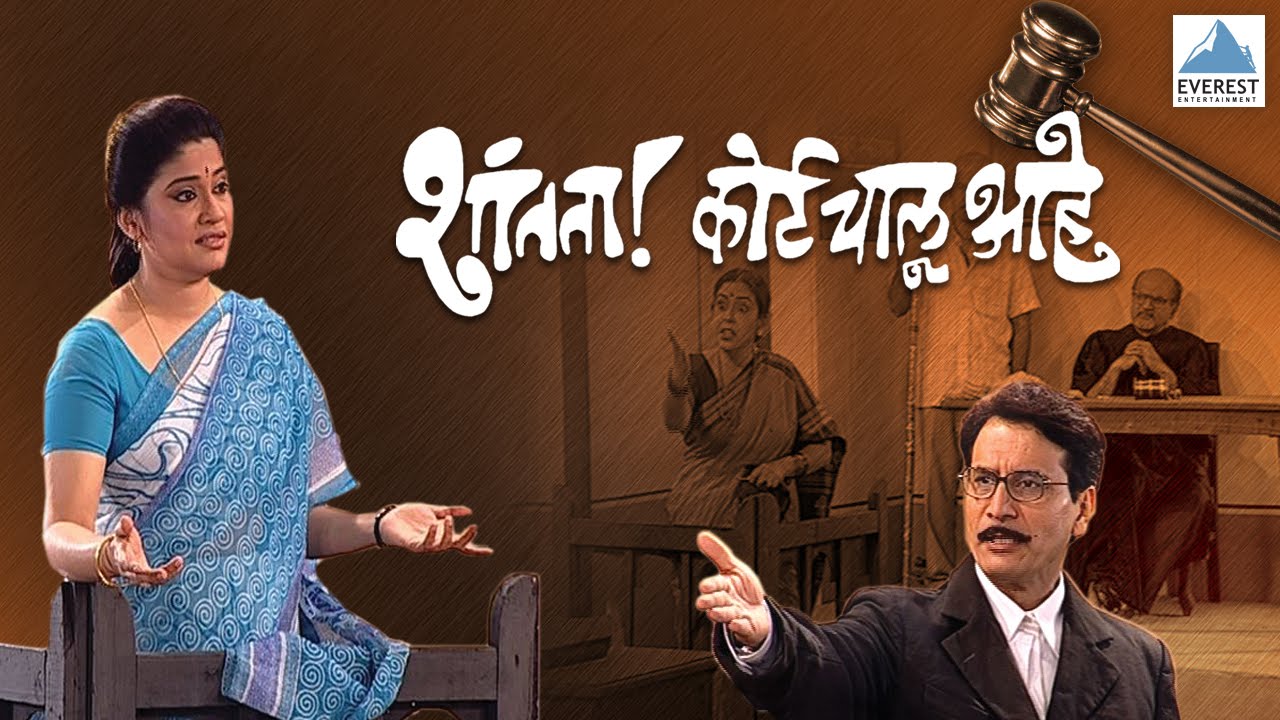
CHAPTER 1 CONFLICT BETWEEN POWER AND POWERLESS 1. GHASHIRAM KOTWAL (GHASIRAM, THE CONSTABLE (1972)) Ghashiram Kotwal is a Marathi play written by playwright Vijay Tendulkar in 1972, as his response to the rise of a local political party, Shiv Sena, in Maharashta. The play is a political satire, written as historical drama. Based on the life of Nana Phadnavis (1741-1800), one ot the prominent ministers in the court of the Peswa of Pune. Its theme is how men in power give rise to ideologies to serve their purposes, and later destroy them when they become useless. It combines traditional Marathi folk music and drama with contemporary theater techniques, creating a new paradigm for Marathi theater with over six thousand. Performances thus far in its original and translated versions, "Ghashiram Kotwal" remain one of the longest-running plays in the history of Indian Theater. The play begins with an invocation to lord Ganesha. Then the Brahmins of Pune introduce themselves and we can see the morally corrupt state of affairs in Pune. Nana Phadnavis who is the Diwan (Chief Secretary) of Pune is also corrupt and visits the lavani dancer. Ghashiram is working with the lavani dancer. Gashiram being a Brahmin goes to collect alms at the Peshwa's festival the next day. However he is ill-treated these and is charged with pick-pocketing and thrown to jail. He then decides to take revenge. Ghashiram barters his own daughter to get the post of Kotwal (police chief) of Pune from Nana. Having got the post he begins to enforce strict rules in the city. He starts asking for permits for everything and starts throwing people in jail for the smallest offences. In the mean time, Ghashiram's daughter is killed by Nana. The situation goes out of hand when a few people in the jail die out of suffocation. The Brahmins then complain to the Peshwa. The Peshwa summons Nana who gives order to kill Ghashiram in the most derogatory way possible. Thus is leads to Ghashi's Death. This play caused a lot of controversy because some people believed that it hurt the feelings of the Chitpawan Brahmin community and that it showed the statesman Nana Phadnavis in a bad light. Hence it was temporarily banned in the state but finally it acquired almost a global reputation. ? CHAPTER2 HUMAN RIGHTS FOR WOMEN 2. SHANTATA : COURT CHALU AAHE (SILENCE! THE COURT IS IN SESSION) (1972) In 1972, "Silence The Court Is in Session" is a milestone in the history of whole Marathi drama. Tendulkar became the center of general controversy. He had already acquired the epithet of the angry young man of the Marathi Theater. The Theater group is Silence! The Court Is in Session, which comes to perform at a village, is a miniscule cross-section of middle class society, the member representative of its different sub-strata, their character, dialogues, gestures and even mannerisms reflect their petty, circumscribed existences fraught with frustrations and repressed desires that find expression in their malicious and spiteful attitudes towards their fellow beings. Leela Benare, the central character of the play, possess a natural lust for life, she ignores social norms and dictates. Beings different from others she is easily isolated and made the victim of a cruel game cunningly planned by her co-actors. Miss Benare's private life is exposed and publicly dissected, revealing her illicit love affair with Professor Damle, a married man with a family, which has resulted in her pregnancy, Interestingly, the accusation brought her at the beginning of the trail that of infanticide turns into the verdict at the conclusion, principally because contemporary Indian society with its roots grounded firmly in reactionary ideas, cannot allow the birth of a child out of wedlock. This very reversal in the attitude of the authorities expresses the basic hypocrisy and double standards on which our society is founded. It is poignant, sensitive and highlights the vulnerability of women in our society but a good thing occurred that Tendulkar received. ? CHAPTER3 THE DEGENERATION oF HUMAN INDIVIDUALS : GIDHADE (THE VULTURES) (1970) Gidhade (The Vultures), produced in 1970 and published 1971, was actually written fourteen years before. It was with the production and publication of Gidhade that Tendulkar name became associated with sensationalism, sex and violence conservative section of Maharashtrian society were stunned by the open display of illicit sexual relations and scenes of violence. The play is a ruthless dissection of human nature revealing its inherent tendencies to violence, avarice, selfishness, sensulaity and sheer wickedness. The degeneration of human individuals belonging to a middle class milieu is exposed through the interaction among the members of a family. Ramakant and Umakant's greed viciousness, their sisters Manik's gross sensuality all add up to naturalistic depiction of those baser aspects of human that one would like to silt one eyes to the Kamala devi Chattopadhyay award for the play and it was translated in fourteen Indian languages. The play gained so popularity that it was staged all over India in different versions. The horizons of Marathi drama widened and this started a healthy exchange of drama in different languages. ? CHAPTER4 DOMINATION OF MALE GENDER OVER THE FEMALE : SAKARAM BINDER (SAKARAM, THE BOOK BINDER) In his 1972 play "Sakharam Binder" (Sakharam the Binder) Tendulkar dealt with the pick of domination of the male gender over the female gender. The main character, Sakharam, is man devoid of ethics and morality, and professes not to believe in "outdated" social codes and conventional wives, and uses them for his sexual gratification while remaining oblivious to the emotional and moral implications of his exploits. He justifies all his acts through claims of modern, unconventional thinking, and comes up with hollow arguments meant in fact to enslave women. Paradoxically, some of the women which Sakharam had enslaved buy into his arguments and simultaneously also badly want freedom from their enslavement. Tendulkar weaves a matrix of intricate interrelationships between his characters. One of the reasons why there was such a reaction against Sakharam Binder was its burning naturalism. Here was a chunk of life with all its ugliness and crudity which was more than a shock of refined and prudish middle-class audiences. Such a direct confrontation with vulgar reality was difficult for them to bear. Yet there is a suitable underlying tone of sensitive and tenderness towards humanist as a whole. No play created such a sensation for many decades in the theater world of Maharashta as Vijay Tendulkar's Marathi play Sakharam Binder. It evoked even more resistance from the censor boards then Gidhade had. ? CHAPTER5 SYMBOL OF SLAVERY : KAMLA This play Kamla was inspired by a real life incident - the Indian Express expose by Ashwin Sarin, who actually bought a girl from a rural flesh market and presented at a press conference. Using this incident as a launching pad, Tendulkar has raised certain value system of modern, success oriented generation who are ready to sacrifice human values in the name of humanity itself. The central character of the play is a self-seeking journalist, Jai Singh Jadhav, who treats the woman he has purchased from the flesh market as a olgect that can procure from him a promotion in his job and a refrutation in his professional life. Jai Singh buys, Kamla, an Adivasi woman, at the flesh market of Luhardaya beyond Ranchi for two hundred and fifty rupees. Jai Singh's enthusiasm is directed towards sheer sensationalism. He creates sensationalism at the express of Kamla. He sells a woman that poor and illiterate woman. Jai Singh Jadhav discards Kamla is an orphenage for woman and washes off his hands for his safety, after she ceases to be an advantage to him. Jai Singh Jadhav exploets not only Kamla but also his wife, Sarita. It is through Sarita 'Tendulkar exposes the Chanvinism intrinsic in the modern male who believes himself to be liberal minded. Jai Singh- through his treatment of Kamla, makes Sarita realize that she is also a slave a lovely bonded labourer to him. She observes how he refuses a bath to Kamla and takes her in clumsy clothes to the press-conference for his professional profit. Jai Singh uses both the woman, Kamla and Sarita as pawns in his game of chess. Jai Singh the Persecutor, persecutes his victims- Kamala, Sarita and Kamala bai. His role shifts to that of the victim and he is persecuted by his proprietor, the persecutor. ? CONCLUSION Tendulkar is a creative writer with a fine sensibility. He has made a mark in the field of literature and drama, he has given the post independence Marathi drama a new idiom by doing this he has put Marathi drama on the national and even international map. Tendulkar is one of those dramatists who use their medium in the service of their favourite socio-political idelogy. He is not out to propagate any particular philosophy of life. Tendulkar's plays are open to diverse interpretation and cannot be tied down to a single line of thinking. All of his plays have direct, one to one relationship with reality. Most of his plays deal with the individual placed against the backdrop of society and explore the tensions between the two. Tendulkar has done multifarious writings, scriptwriting, and award-winning films. The greatest quality which Tendulkar can claim as a creative writer and dramatist is an ability to simultaneously involve and distance himself from his creation. This endows his works with infinite subtlety. His creativity has a prismatic quality myriad potential and a multitude of colors. This multifaceted, towering genius has explored genius the potentials of the dramatic genre-his primary area of creation. His works will also have a massive impact on the tender fresh minds of the world wide avid readers. ? BIBLIOGRAPHY (A) PRIMARY SOURCES 1. Tendulkar, Vijay : Five Plays, 1995 Bombay : Oxford University Press. 2. Tendulkar, Vijay : Ghasiram Kotwal (3rd ed)/ Seagull Books, Calcutta, 1999. (B) SECONDARY SOURCES 1. Bharan, N.S. : The Plays of Vijay Tendulkar, Creative Books, New Delhi, 1999. 2. Naik, M.K. : A History of Indian English Literature, Sahitya Academy, New Delhi, 1982. 3. Prasad, A.N. & Yadav, Saryug (ed) : Studies in Indian Drama in English, Prakash Book Depot, Bareilly, 2003. 4. Veena Noble Dass 'Woman Characters in the plays of Vijay Tendulkar' New Directions in Indian Drama (New Delhi : Prestige, 1994) 5. P.D. Dubbe : 'The Theme of Flesh Trade in Vijay Tendulkar's 'Kamla' The Commonwealth Review (ISCS) vol v. No. 1, 1993-1994. 6. Duff, Grant : History of the Marathas, Vol. 3, MM Publications New Delhi 1987. 7. Vivek Bendre "An Interview with Vijay Tendulkar" Frontline vol. 22- Issue 24 Nov. 19-Dec 02, 2005. 8. Subuhi Jiwani : Vijay Tendulkar is a scathing interpreter of maladies, Daily New Analysis, The Times of India, Friday, Oct. 07, 2005. 9. Babu, M. Sarat, Vijay Tendulkar's Ghashiram Kotwal, Creative Books New Delhi 2001. 10. Sharma, Vinod Bala : Vijay Tendulkar's Ghashiram Kotwal : Critical Perspectives Creative Books, New Delhi 2001. 11. Debnita Chakrabarti : "Ghasiram Kotwal" India Interacts (World Section). Jan 09, 2008.


